Seeing Systems, Finding Home

Category: Coping

Taking the Stress out of Surgery – With Amazing Results

Surgery is stressful. Even before they start cutting into your body, something stressful is going on – a disease or other problem that led to a surgeon’s office. Except for the most minor health problems, most of us have limited understanding of what’s going on, what can be done about it and what the outlook is. “Not knowing is hard,” I frequently say, to acknowledge the stress that arises from lack of knowledge.
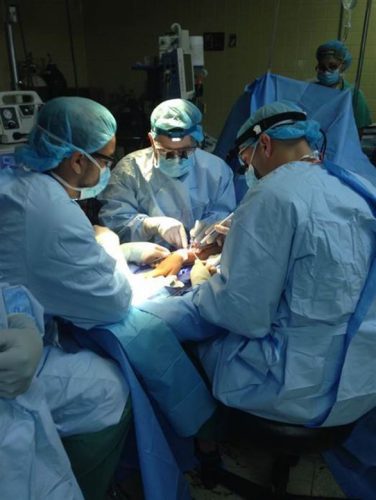
I’ve been accompanying my brother on this kind of journey, as he received a scary diagnosis and underwent a big operation (which went even better than we dared hope, I’m happy to say). His surgery took place at Medical Center of the Carolinas, where we learned about a set of protocols called ERAS – Enhanced Recovery After Surgery. As they walked us through its components, I realized that ERAS is all about stress management – both physiological and psychological stress (the two are inseparable, but we sometimes forget that).

Here are the startling results when a hospital implements ERAS. Stay time drop up to 30 percent, complications drop by up to an astonishing 50 percent and your chance of dying drops similarly. Wow. (I will never have surgery in a hospital that hasn’t adopted ERAS.) One study showed that for a big, open abdominal operation like my brother had, ERAS reduces the recovery time and complications to about the same as if they’d operated laparoscopically (through tiny incisions). As a result of shorter hospital stays and fewer complications, costs go down, often dramatically, which is good for everyone.

Like other kinds of stress management, ERAS starts with education. On our first visit with the surgeon and team, they took their time, gave lots of information and patiently asked for and answered all of our questions. None of the rushing in and out that seems to be so often the norm in medicine. Surprising, considering that his surgeon is so skilled that people come from all over the world for his care.

We were asked to take a “class” (only the two of us were in it), where a nurse quite patiently walked us through all of the possible procedures the surgeon might have to do. She stepped through each post-op day of recovery, detailing what he would be eating, when he’d get out of bed (almost immediately), goals for each day (walk this far, eat this kind of food) and so forth. Even though it was a ton of information, the result was that we had an good picture of all of the possibilities and what they would mean in terms of recovery and possible tubes and drains they might have to put into him. Knowledge reduces stress.

One of the surprises was that ERAS does away with the ban on eating or drinking just before surgery. Although he needed to skip breakfast, they gave him two bottles of high-carbohydrate drinks. One was for the night before surgery, the other was for a few hours before. If you know much about stress, you are aware that it messes with your body’s endocrine system – blood sugar and related hormones. ERAS addresses the physiological stress response by carb loading prior to surgery – much like marathon runners do – and careful blood sugar monitoring afterwards. All of the education also undoubtedly helps manage those levels, since psychological stress also raises your sugar, cortisol and other “stress hormone” levels, which ultimately slow down healing and eventually cause health issues.

ERAS also includes pain management protocols because pain provokes your mind and body’s stress response. When ERAS is used, patients need less pain medication. ERAS even addresses simple things like ensuring that patients are kept warm. There are other, more medical aspects to ERAS (such as preventing blood clots), which aren’t as directly related to minimizing stress response.

The hospital also makes available an app, SeamlessMD, which coaches patients through all of this. I was impressed when I saw that its very first suggestion is to rally your social support. In virtually every study, social support is the most important factor in bouncing back, mitigating stress and thriving under pressure

In short, ERAS encompasses information, nutrition, exercise, social support – these are always the ingredients for resilience and thriving under stress. The big takeaway for me is to reinforce that stress is always physical, mental and spiritual. They cannot be separated. If we want to be more resilient, to thrive under stress and bounce back fast when life tosses us challenges or threats, we need to address mind, body and spirit.

Yes, spirit, also. Although ERAS doesn’t directly address what we’d normally think of as spiritual concerns, it implies a set of values consistent with our spiritual needs. ERAS calls upon hospital staff, patients, their families and friends to be generous with their time, knowledge and support. Although that’s not explicit or part of the research I reviewed, I have no doubt it affects outcomes a great deal.

Paramedics with social support sleep better

An article in the Journal of Occupational Health Psychology earlier this year described a one-week study of paramedics’ sleep and their social support. Those who saw themselves as having more social support reported better sleep. The researchers also observed that the sleep quality of paramedics who perceive more support isn’t as impacted by job stress.  On the other hand, they reported “Those with low levels of support displayed poor sleep quality in the face of high occupational stress.”

In recent years, it has become quite clear that good, deep sleep is vital for coping with stress – poor sleep is associated with increased risk of developing PTSD.  The correlation between social support and coping with stress has also been observed repeatedly in studies. It’s unsurprising to find a link between social support and sleep quality – this reinforces the importance of both.

We should stop teaching “eustress and distress”

Stress management often teaches that there are two kinds of stress – distress, which is what we usually think of as stress, and “eustress” – stress that is good for you. The idea of eustress – the word itself – came from Hans Selye, a pioneer in understanding how our bodies respond to challenges. Selye was an endocrinologist, focusing on hormones and the systems that regulate them.

One of Selye’s great insights is that when we experience a change or other challenge, we will have a physical stress reaction, whether we see it as positive or negative. For example, graduation from high school or college – an event the graduate certainly considers positive – is stressful. And of course it is – a fresh graduate faces uncertainty about what will happen next. Their social support network, a key source of resiliency,  is disrupted as they lose touch with classmates.

Selye’s fundamental insight, that both positive and negative events are stressful, has been demonstrated to be true in many, many research projects. Cognitive neuroscience is unveiling more of the mechanisms and complexities of our physical and emotional responses to stress.

Talking about “distress” and “eustress” is confusing. Psychologists use them because in casual talk, ee use the word “stress” to refer to both the cause and our reaction. “Graduation is stressful” and “I’m stressed about graduation” are both reasonable sentences, but they are saying two different things. The first is about what happened, the second is the graduate’s reaction to it.

Let’s swap in the other words. “Graduation is distressing me” sounds reasonable, but means the same thing as “Graduation is stressing me.” Let’s try the other one. “Graduation is eustressing me” not only sounds awkward, it doesn’t make any sense, since “eustress” is about the graduate’s reaction.  The accurate way to use the word would be “I am having a eustressful reaction to graduation” – a sentence that could only be pleasing to a psychologist.

Using these words was been based on the belief that the difference between eustress and distress is the intensity of our reaction.  We taught people that too much stress is bad for their health, so we should reduce and avoid stress in order to avoid crossing the line from eustress into distress. Now we know that there is no such line.

In recent years, convincing evidence shows that our perception makes a big difference in how our body reacts to stress. If we see a threat, our bodies react in ways that probably will cause illness in the long run. If we see a challenge, stress becomes our friend, we perform better and don’t undergo the physical reactions that cause health problems.

Our perceptions of whether we are facing a threat or a challenge are influenced by how much social support we have. When we are alone, almost anything will look like a threat. Isolation is toxic to our health. Values and spiritual beliefs also make a difference in whether we perceive stressful occasions as threats or challenges.

Instead of talking about distress and eustress, we should be teaching people that they can handle enormous amounts of stress and thrive, then give them tools – attitudes and actions – that transform how they think and react to life’s challenges.


Election 2016: When reality and “rules” collided

(Trigger warning – this post contains the “F” word – “Feelings.” A lot.)

If you’re on social media, you’ve probably seen reports of colleges cancelling classes or postponing exams because of election grief. You’ve probably also seen the responses – those students should just suck it up and turn down their sensitivity. Some of the “advice” has turned into outright mockery.

First, a reminder that it is never helpful to tell another person – or yourself – how they “should” feel. It is tempting when emotions strike us as inappropriate, weak or wrong and we want to explain them away. It is a natural inclination. But especially now, we need to look deeper, listen harder. I know that I’ve caused myself a lot of suffering by insisting that something “should not” upset me, because…. whatever.

After getting requests to help lead post-election emotional support groups, I’ve been asking myself if the election really is a subject for crisis intervention as I know it. My answer is a qualified “yes.” It is yes, because people are having strong reactions. We never base our decision to intervene on what happened, we base it on reactions. But it is a qualified “yes” because we are in new territory. In all of the crisis intervention training I’ve had, nobody ever taught me how to respond to a political event that impacts everyone,  in which so many people have strong beliefs and feelings. We’re at an intersection of psychology and sociology where I doubt anyone really knows what’s best.

For those who are bringing people together for emotional support, I’ve compiled some guidelines.

Here’s what we do know about holding strong (often unconscious) beliefs – they can be the source of great emotional pain, frustration and anger when reality disagrees. Today, people who strongly believed that the United States could never, must never elect someone like Donald Trump (regardless of who or what they think he is), are having that kind of stress. The more certain they were that “someone like Trump” could not or must not win, the stronger their emotions probably are.  Notice that this is about “facts” they believe, not judgments. It is quite different to believe “Trump cannot, must not win” versus “Trump should not win.” The latter leaves room for acceptance and disappointment – perhaps deep, deep disappointment – rather than the confusion, anger, frustration, resentment and even violence that the first one can trigger.

An “unenforceable rule” is the name that psychologist Fred Luskin, author of “Forgive for Good”, calls this kind of belief.  We need rules to make sense of the world, but when we hold onto unenforceable rules in the face of conflicting reality, we’re stuck – painfully, often angrily stuck, often with no clear sense of why.

For those who had the unenforceable rule “Trump cannot, must not win,” and now believe that his election will cause pain to them or to people they care about or identify with, the feelings are amplified. When the effects are personal, pain, anger and frustration are stronger.

Well, say the critics in social media, those people just need to get in touch with reality! But that doesn’t work – logic doesn’t wipe out feelings. In fact, saying things like “You’re out of touch with reality” will probably make the feelings worse – broadening the divide – because it amounts to telling them how they should feel.

In a Star Trek episode, a senior officer yells, “Lieutenant Worf, I order you to calm down!” It doesn’t work. It never works. Not with Klingons. Not with humans.

A supportive response starts with nothing more than acknowledging the pain, frustration and anger that many people feel, quite naturally, now that world has refused to go along with how they think it’s supposed to be. If you believe that’s just catering to weak-minded wimps, hang on. Those people have a great challenge before them. They can hold a grudge, build resentments, perhaps even cross the line from political protest into criminal behavior. Or they can take a more difficult, positive path for which Luskin’s book can be one of the guides. His book can be especially meaningful to those who were already mired in resentments against their political opponents.

Resentments are like taking poison and waiting for the other person – or political party – to die.

If you were one of the “Trump cannot, must not win” people, your choice is between getting stuck there or aiming for connection and compassion. I would invite you to start with compassion for yourself – the world really did suddenly stop making sense – on a global scale! – and that truly is difficult. You will find that compassion for others is a great source of peace.

If you’re one of those who is tempted to issue orders – “It’s reality, deal with it” – you’ll find that compassion will go much farther.

At some point, healing and growth call us to take action. In my opinion, the most important action we can all take these days is the hard work of reconnecting with one another. We are so disconnected. Our American individualism has been an ally, but it has also meant we were always a less interdependent society. Technology – from highways and TVs to the Internet and smart phones – has prompted more disconnections than connections. The election outcome surprised us because we are so disconnected. Most of us had no idea of the depth of discontent and anger, in our nation.

Far fewer of us would have held the “Trump cannot, must not win” unenforceable rule if we knew each other better. Too many voices are unheard, too many faces unseen – and although Trump tapped into the politics of disconnection, this is far from merely a political problem. When we are disconnected and dispassionate about each other, we are weaker. The more isolated we are, the less stress we can handle.  Creativity and growth thrive on exposing ourselves to others’ ideas, even – perhaps especially – ideas that disturb us. “Love your neighbor as yourself” includes the neighbors you feel uncomfortable around.

We need creative solutions today and disturbing ideas are often fuel for creativity. One of the most creative people I have ever known, who often seemed to most people (including me for a long time) to be a narcissistic, egotistical prima donna, invited me back to his company, over and over, for years, to criticize his ideas. It was my job – I was an industry analyst. But I wondered why he encouraged me, even though I would often publicly challenge his cherished ideas and products. If he really was a narcissist, why expose himself to that? After he died, when I read his biography, I realized that he was in the habit of keeping people around him who disagreed, who would argue. In fact, if you agreed with him regularly, that would get you fired. I can’t say that I ever really liked him, but I respect the way he embraced the challenge of people who would tear apart his ideas. His name was Steve Jobs. One more thing about Steve that many people either don’t know or don’t appreciate – he practiced meditation. Nobody should try to imitate Steve, but I think we would all benefit by following both of those habits, especially these days.


Dark Humor

It’s no secret that many of us engage in, and possibly rely on, dark humor to get through tough days. I find myself frequently reassuring responders that there’s nothing wrong with the black, sick jokes, as long as we keep them among ourselves.

A few years ago I got a taste of how they feel to the public when I arrived at an accident that a close friend was directly involved in. My friend was feeling responsible for serious injuries to the victim. I identified myself as a critical incident responder and asked a police officer how the victim was doing. He gave me a very grim look, twirled his finger and said, “Circling the drain.” He waited a beat for my reaction, then smiled and said, “Just kidding. He seemed to be okay when they transported him.” For a moment, my heart had sunk, wondering if the victim was going to die (he didn’t, but his injuries were critical). When I realized the cop was joking, I felt a moment of anger, but reminded myself that dark humor is a coping mechanism. I doubt most ordinary people would feel anything but angry at the apparent insensitivity. Go ahead and make the sick jokes, but don’t laugh out loud on the scene of a tragedy – even if all you are doing is directing traffic.

Here are a few good pages about the psychology of dark humor.


It’s Good to be Bad: The Psychological Benefit of Dark Humor – Contains really sick jokes, if that’s what you are after.

Humor as Weapon, Shield and Psychological Salve – Includes discussion of the Nazis’ fear of humor. Possibly quite timely in the current U.S. political season.

Awfully Funny – A deeper dive, with research references.


© 2026 Through the Smoke

Theme by Anders NorenUp ↑